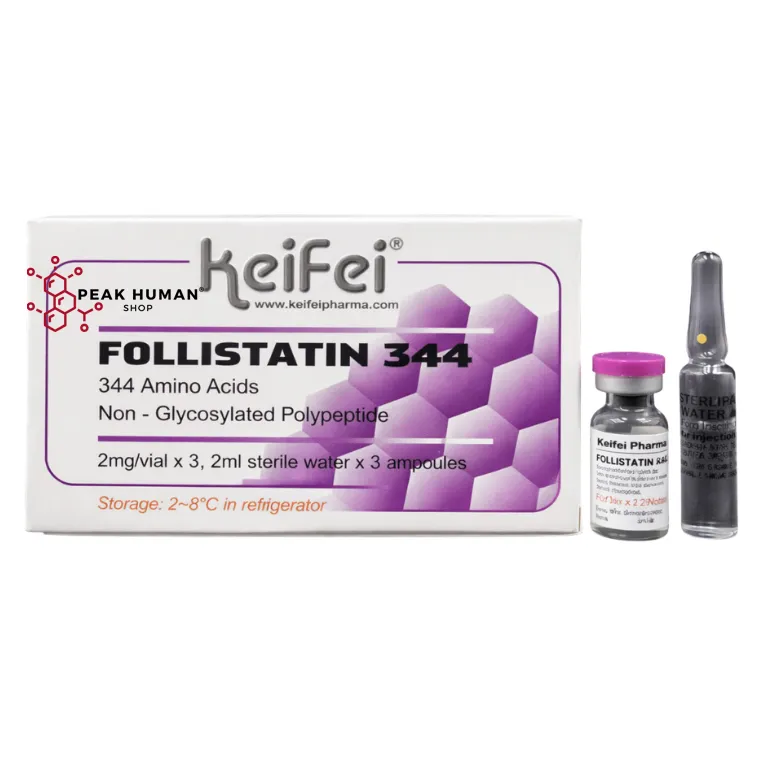
Keifei Follistatin Follistatin 344 Peptide

$270.00
Keifei Follistatin is a powerful peptide known for its ability to inhibit myostatin, a protein that limits muscle growth. By blocking myostatin, this peptide promotes accelerated muscle hypertrophy and strength gains, making it highly sought after for advanced muscle-building and athletic enhancement.
Out of stock
Follistatin (FST344) — Activin-Binding Protein
Pharmaceutical Form: Peptide for reconstitution | Alias: Activin-Binding Protein
Presentation
Each 2ml multi-dose vial contains 2mg/vial, with Keifei® wording imprinted on the side. Vials feature a purple flip-off cap stamped with Keifei®.
Supplied as:
- 3 × 2mg vials + 3 × 2ml bacteriostatic water ampoules inside a white & purple box with plastic insert.
- One set of 10-digit authentication codes affixed to the plastic tray.
About Follistatin
Follistatin (FST344), also called Activin-Binding Protein, is a secreted glycoprotein expressed in nearly all tissues of higher animals. It contains 3 follistatin-like domains, 3 Kazal-like domains, and 1 TGF-β binding (TB) domain. It is primarily produced by folliculostellate (FS) cells of the anterior pituitary.
Mechanism of Action
- Inhibition of FSH: Follistatin is a specific inhibitor of the biosynthesis and secretion of pituitary follicle-stimulating hormone (FSH).
- Activin antagonist: It binds directly to activin, blocking its signaling pathways.
- Isoforms: Isoform 1 is the predominant form in serum but absent in follicular fluid.
Physiological Role
Initially identified as FSH-suppressing protein (FSP), follistatin was isolated from follicular fluid due to its ability to inhibit FSH secretion. Together with BMPs, it plays a key role in ovarian folliculogenesis.
- Promotes progression of the follicle from early antral to antral/dominant stages.
- Encourages differentiation of granulosa cells (GC) into estrogen-producing cells.
- Supports transition of GC into progesterone-producing luteal cells of the corpus luteum.
Key Points
- Potent regulator of FSH secretion.
- Functions as an activin antagonist.
- Critical role in folliculogenesis and ovarian function.
- Expressed across a wide range of tissues.
- Supplied with QR authentication to ensure originality.
Related products
All Products
All Products
All Products
All Products
All Products
All Products

All Products
All Products